Common Questions About Rubber Stone
Homeowners ask about slip resistance, maintenance, and how the material holds up in heat and rain. These answers cover the most frequent concerns.
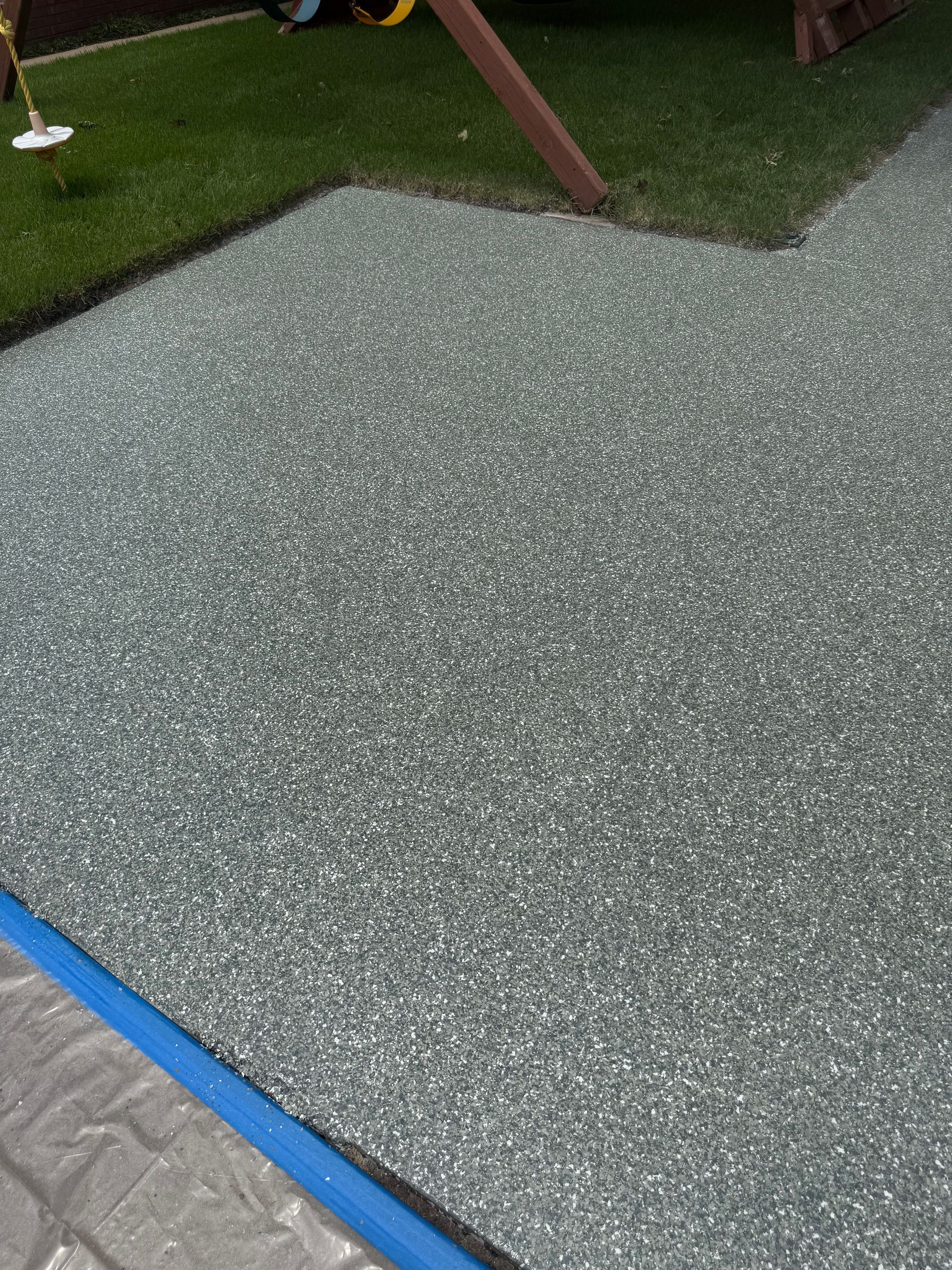
- How slippery is rubber stone when wet? It provides better traction than tile, painted concrete, or sealed pavers. The textured surface grips wet feet and prevents slipping, even when the area is soaked.
- What maintenance does rubber stone require? You sweep or hose it down to remove debris. Stains from leaves or dirt can be scrubbed with mild detergent and water. The surface does not require sealing or refinishing.
- How long does rubber stone last? It typically lasts ten to fifteen years with normal use. Heavy traffic or sharp objects can wear down the surface over time, but repairs can be patched without replacing the entire area.
- Can rubber stone be installed over existing concrete? Yes, as long as the concrete is clean, level, and free of major cracks or movement. Small cracks are filled during preparation, but large structural issues must be addressed first.
- Does rubber stone stay cool in Fort Worth summers? It stays cooler than concrete, asphalt, or pavers because it reflects more heat and has a lower thermal mass. It is noticeably more comfortable for bare feet during peak heat.
If you need a safer, more comfortable surface around your pool, patio, or gym, H Bar Epoxy and Concrete Coatings, LLC can assess your space and provide a detailed plan for installation.